Maslow's Peak: Reports From the Left
  • home
  • blog
  • grant consulting services
  • about
  • contact

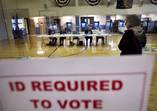
Short-Sighted Shift in ID Law Leaves Students Out

9/9/2012

0 Comments

 
Picture
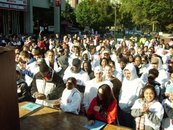
Temple University students
The Youth Vote?  Pennsylvania GOP Isn't Interested. 

Republican Legislators, State Department officials, and Governor Tom Corbett worked together energetically this year to make it much harder for college students in Pennsylvania to vote in November.  Perhaps they are aware of the high turnout of Obama voters among young people that took place in 2008.  But the obstacles they have strewn in the way of young voters in their state this year may turn out to be ill-advised. 

As is often the case when young adults are told to step aside from their rightful place in society, this may tick off enough students that they will turn out in numbers beyond even what was seen in 2008.  If so, the Pennsylvania GOP will be soon be second-guessing their own tactics. 

But regardless of the outcome this November, it's hard to figure how the Republican Party ever expects to woo young voters, who they must realize are going to be crucial to the long-term vitality of their party.  Using more restrictive Voter ID laws in ways that impact students is an immediate risk, and a long-range blunder.

Political analysts observed great changes in partisanship among young people in the US after disenchantment with the Democratic Party during the Johnson years.  College campuses saw the growth of Young Republicans and later, thriving Neo-Con societies.  Students as a group today would probably best be described today as post-partisan.  Their vote went overwhelmingly in favor of Obama in 2008, but they don't tend to describe themselves as stalwart Democrats.  Young people interested in politics today are more independent than any group of voters in the country's history.

But hey, with enough effort, a whole Party certainly could alienate young voters.  By taking a position hostile to free exercise of the ballot for students, Republicans could lose the trust of young voters for another generation.

How the New Pennsylvania Voter ID Law Makes it Harder for Students to Vote

The Pennsylvania Legislature passed a Voter ID law in March, significantly tightening requirements.  The new guidelines only allow for a handful of acceptable, government-issued photo ID types.   The list does include student ID's, but with restrictions that have a negative impact on the vast majority of college students registered to vote in PA. 

The new law requires that in order for a student ID to be accepted at the polls in November, the card must display the name and photograph of the student, and an expiration date.  It's the last part that makes most of the student ID's in Pennsylvania non-compliant with the new law.  It isn't clear what - if any - research was done by legislators writing the bill, but advocacy organizations quickly discovered that of the 110 accredited colleges, universities, and technical schools in Pennsylvania, 91 do not have ID cards that bear an expiration date, making them unacceptable at the polls.
Are Solutions in the Works?
Many colleges and Universities whose student ID cards do not comply with the new requirements are scrambling to help their students get what they need in time to vote. 

Some schools are producing and issuing stickers with expiration dates that can be affixed to existing cards.  Some schools are producing and issuing all-new cards that include an expiration date. 

Some schools, however, don't currently have plans in place to ensure that their students will have the ID they need in time to vote in this election.  Voting advocates are still urging those schools to provide students without compliant ID to take action in time for election day, or at the very least work to apprise their students of the situation. 

Unfortunately, schools were not consulted in the implementation of law, or even officially informed of the changes.  Any actions these learning institutions are taking now to help their students adapt to the changes in time to vote are voluntary.

What Other Options Do Students Have?
Students that have a current PennDOT driver's license or non-driver's ID can use that to vote.  For students from out of state, the situation is grim.  In order to obtain a PennDOT ID, the student must surrender their out-of-state ID.  They then have the same rigid requirements for original documents that native Pennsylvanians without ID are finding it hard to meet.    

For more information, and help getting ID in Pennsylvania, visit www.seventy.org.
0 Comments

Indefensible election law changes.   

9/8/2012

1 Comment

 
Picture
The average middle-class voter can be forgiven for not getting why election-year changes in voting laws are such a big deal.  The average middle-class voter can take time off work for appointments.  She uses a driver's license frequently to cash checks, drink, fly,
or rent a car.  This voter probably has a passport, or keeps a folder of vital records in a home filing cabinet.  He can quickly locate a current mortgage, lease, or bank statement.  This voter can read, speak English, and plug-in to current events through TV and internet.  She is able to find support when coping with her own or a loved-one's disability.  This voter can get around town.  He uses a phone daily, and has the ordinary skills needed to navigate the maze of mainstream American life. 

Those who live squarely within societal infrastructure may puzzle at the outcry over every decision made by officials in various states regarding when and how its citizens vote.  If these changes in law don't affect you, or the people around you, it's hard to fathom the critical impact they can have on those with more tenuous connections.  Don't these changes simply ask for a reasonable adjustment on the part of the voter?  Will cutting back on early-voting hours really take such a toll?  Does a change in the rules for identification procedures really make voting suddenly forbidding for some?  For the greater number of voters, these concerns might seem like a stretch.

But while the casual observer can be excused for not immediately anticipating the severity of hardship placed on some voters by voting law changes, government officials cannot be extended the same allowances.  It is a fair expectation of elected officials that they take responsibility for ensuring equal access to the ballot for all of their constituents.  It is up to those who serve the public to guarantee that its members not encounter unnecessary barriers to a right as fundamental as voting.  Public officials have extraordinary access to the fundamental systems of democracy, and thus an extraordinary obligation to justify any actions taken that may have an impact on voter participation.

The first duty of those who officiate elections is to ensure that no voter encounters an unfair obstacle to casting a vote.  Procedural changes, especially those that potentially increase barriers, should never be made without clear and compelling evidence that they are necessary.  If an accelerated pace is proposed, the evidence should indicate some  urgency.  Otherwise, even when new procedures are indicated, they should be phased in with community input, assessment of impact on turnout, and consultations with other states to gather best practices for success. 

If officials want to decrease voting hours, they need to to explain what was wrong with the hours they had.  If officials want to tighten ID requirements, they need to say why the previous procedures for identification weren't working.  If officials want to make fast-paced, wholesale decisions about the integrity of their voter rolls, they'd better explain why their list of eligible voters wasn't better maintained between elections.

Without accusing officials of partisan motivations, we can still place the onus on them for justifying policy decisions that threaten access to the ballot for eligible voters.  In the absence of any credible rationale, and without an abundance of level-headed preparation, no changes in election law should ever be made in an election year.


1 Comment

PA election officials.  Only thinking of you.

9/3/2012

0 Comments

 
Picture
PA Voter ID
Pennsylvania Department of State requires voters seeking new
Voter ID card to first exhaust all efforts to obtain
PennDOT non-driver photo ID. 

Picture
PennDOT ID
A PennDOT driver's license or non-driver's ID  will be required to vote in presidential election this November 6th.  Along with a handful of other types of government-issued photo ID, (see below), a PennDOT ID must be presented at the polling place in order to receive a ballot, according to a new law effective this Election Day. 

As an alternative, registered voters having difficulty obtaining a PennDOT ID have been offered a newly-created Voter ID, developed by the Department of State and issued through PennDOT Driver's License Centers.  But the new Voter ID is proving no easier to obtain.
The PennDOT non-driver's ID is not easy to get if you are not in immediate possession of the four types of documentation, including original birth records, required for an application. It places particular hardship on elderly voters who can't locate a raised-seal birth certificate; students registered to vote in PA who carry an out-of-state driver's license; and voters with physical disabilities, those who work long or inflexible work hours, or who have young children in tow: in most cases these voters are finding that getting a PennDOT ID is requiring more than one trip to the PennDOT DL Center.

In response to complaints, and pressure from voter's advocacy groups, last week the Department of State finally released their anticipated "safety net" Voter ID, reassuring the public that this new Voter ID will ensure that no registered, eligible voter is turned away from the polls.  But even leaving aside the voters that will not have heard about the strict new requirements until they walk into their precinct's polling place, where they have voted under the same procedures as long as they have been voting, those who are getting the word in time are discovering that by design, the so-called streamlined ID is no easier to get than the PennDOT ID.  That's because the State wants you to take the long way around, applying for the PennDOT ID first.

Officials at PennDOT, working with the Department of State, have declared the PennDOT ID, although harder to obtain, "a better product" than the Voter ID, because "it can be used for multiple purposes," whereas the Voter ID can only be used for, well, voting.

So voters, anxious to meet the new ID requirements in time to be heard in this national election; voters who by definition don't drive and have apparently not been in urgent need of current, official, government-issued photo identification; voters who don't drive, fly, purchase alcohol, or rent cars; voters who just want to vote, are being told that while the PennDOT ID is not easy to obtain, if, for example, they don't have "the birth certificate with a raised seal (and) will need to visit a driver license center twice," the extra steps will pay off, because "they will receive a product that can be used for many day to day identification needs." 

PennDOT, the only agency providing the Voter ID, is therefore requiring every applicant to apply first for a PennDOT ID.  "PennDOT wants to make every effort to issue this product first," as "the Voter ID will be valid for voting purposes only."  If unable to meet the documentation requirements for the PennDOT ID after two trips and signing a written oath that the documents cannot be located, a voter can provide whatever documentation they do have and will be at last issued a Voter ID.

Right now, for voters discovering barriers between themselves and their ballot, the one thing they're looking for is identification "for voting purposes only."

****************************************

In Pennsylvania, Strict New ID Requirements, effective November 6, 2012
Before March of this year, voters in PA showed identification only when registering, or when voting for the first time in a new precinct.  This identification could include any of the following: a PennDOT driver's license or non-driver ID, a student ID, a work ID, a bank statement, a library card, or a pay stub or utility bill.

Starting November 6th, all voters must present a government-issued photo ID in order to vote.  These include: a PennDOT driver's license or non-driver ID, passport, military ID, government employee ID, student ID (if it displays an expiration date), or a photo ID from a Pennsylvania care facility.

Obtaining Acceptable Forms of ID
Picture
If a registered voter does not have a current form of one of the ID's listed above, their first recourse is to go to a PennDOT DL Center to apply for a PennDOT non-driver's ID.  They'll need a raised-seal copy of their birth certificate, an original copy of their Social Security card, and two proofs of residence, such as a lease and a current utility bill.

If a voter does not possess a raised-seal copy of their birth certificate, they'll need to go to a PennDOT DL Center and do the following: 
  • sign an oath saying they do not have an official birth certificate
  • fill out an application for a "Certification of a Birth Record for Voter ID Purposes Only"
  • show their Social Security card and 2 proofs of residence
  • fill out an application for a PennDOT non-driver's photo ID

The voter must then wait up to ten days for letter from the Health Department and return to the PennDOT DL Center with the letter.  If the letter verifies the birth records, the voter can get a PennDOT ID on this second trip.

Setbacks Encountered
Some voters - especially among the elderly - have received letters from the health department stating their birth records can not be located.  Other voters, born in another state or country, can't locate birth records or have to pay a fee.  Students voters have learned that their student ID cards must bear an expiration date to be considered suitable.  If their school's card does not, and their driver's license is from out-of-state, they can apply for a PennDOT ID, but they must first relinquish their out-of-state ID, sign a written oath that they don't have other acceptable ID, and through the same documentation procedures AS it gets closer to election day, there will be voters who don't find out about the new requirement in time to allow for two trips to a PennDOT center and a ten day wait on documents. 

A Would-Be Solution, With a Catch

Picture
In comes the the newly-minted DOS Voter ID card.  While the setbacks above were quickly discovered, the PA Department of State has been slow to respond.  As early as April, voters trying to obtain ID hit barriers.  Finally in late August, the DOS released the Voter ID card.  Described as a "safety net" option for those encountering obstacles to getting documentation, State officials have said that "the process has been streamlined and the requirements are less stringent to obtain (it)."  Now racing to inform all registered PA voters of the new requirements and how to meet them, voter advocates look to the Voter ID as extra insurance that every voter will be able to walk into their polling place holding an acceptable form of ID.  As of now though, since the Voter ID will not be provided unless and until all the avenues to getting a PennDOT ID have been exhausted, advocates fear it is the voters who will become exhausted. 

Voter groups plan to continue to push for procedures that will ensure every registered voter can vote November 6th.

0 Comments

For once, great news for voters in Texas!

8/30/2012

0 Comments

 
Picture
Of course, it comes by way of a federal court.  The DC Circuit Federal Court of Appeals struck down the Texas Voter ID law today. 

The law was one of the strictest propositions this country has seen in recent efforts to tighten ID requirements. The State of Texas was not prepared to offset fees certified documents needed to get the new ID.  They offered no plan to mitigate the burdens faced by voters who would have to travel long distances to agencies providing the documents and ID's.

This lack of support, for registered voters forced to scramble to meet new ID requirements by November 6, was the downfall of the law.  The court found that Texas did not begin to meet its burden - per The Voting rights Act - to prove the new requirements would not prevent minority voters from casting their ballot.  It was the possibility of incurred costs that set the Texas law apart from the Pennsylvania law that is also in court. 

Opponents of the Pennsylvania ID may face a tougher challenge in court than Texas; the PA Dept. of State has provided for free birth certificates for those who need them.  But the roll-out in Pennsylvania is already underway, and voters have encountered one problem after another trying to get ID's.  Hopefully the weight of so many real-life examples of the barriers created will make the PA law unacceptable to the courts.

The other Voter ID law that is presently in court is the one in South Carolina.  I don't have as much information about that one yet, but I understand it is less strict than the Texas law, so it may survive trial.  More on that tomorrow.

Click here to read the Texas decision from today.


0 Comments

Alert regarding Pennsylvania Voter ID

8/29/2012

0 Comments

 
Picture
This is a status update on the situation unfolding in Pennsylvania regarding new voter ID requirements.  ID requirements there have been tightened to the strictest standards, effective on election day this November 6th.

The Pennsylvania Department of State announced this week it will provide a free "safety net" photo-ID card, for registered voters who are unable to obtain an official PennDOT photo ID. 

The nation watching may be excused for thinking this will enable many of the hundreds of thousands of voters without ID to vote in this election.  In fact, shortcomings in the system continue to create barriers, and it is still very possible that many registered voters will not be able to participate in this year's election. 

The safety net ID is intended to be a last recourse only, and a person seeking this ID must first take steps to obtain a regular PennDOT photo ID. 

To obtain a PennDOT ID, a registered voter must appear in person at a driver's license center and present a raised-seal birth certificate, a Social Security card, and two forms of proof of residence, such as a lease and a current utility bill. 

If the registered voter is not in possession of a raised-seal copy of the birth certificate, these steps must be taken:

  • go in person to a PennDOT driver's license center; present a Social Security card and two proofs of residence
  • sign an affirmation stating you do not have a birth certificate
  • fill out a form requesting a non-driver's PennDOT ID
  • fill out a form requesting certification of birth record
  • return home and wait up to ten days for a letter from the health department
  • return to the letter PennDOT driver's license center
  • if the health department letter certifies your birth, you can get your PennDOT ID
  • If the health department letter indicates the health department is unable to verify birth, then you can get a "safety net" ID.

Ellen Kaplan, Vice President and Policy Director at the Committee of Seventy, a non-partisan Philadelphia organization that works for fair elections, submitted inquiries to the Department of State as to whether there was a way a voter could obtain the safety net ID in one visit.  Answers were unclear, and even implied that this might depend depend on the judgement of the DOT employee the voter encounters the day of their visit.  Asked if a voter might be able to obtain a same-day ID, a DOS representative responded that voters were encouraged to bring "all the documentation they have with them," and the PennDOT clerk "will determine if the registered voter has all the necessary documentation" for the regular non-driver's PennDOT photo ID.  If the PennDOT clerk "determines that the customer does not have all the necessary documentation" and can't get it, the clerk will "begin the process of issuing" the safety net ID.  "Assuming the customer meets the requirements, a (safety net ID) will be issued and the customer will leave with the ID card."

This ID is intended to be a last resort "save" so that no registered voter will be blocked from voting this November.  But it can only act as a save if a registered voter without government-issued photo ID learns about the new requirements before election day and has enough time to obtain one.  It will only work if the voter understands this set of requirements for getting the ID, and has access to a driver's license center during business hours.  Rural voters, elderly voters, voters without transportation or time off work will be even less able to obtain ID.

If the new requirements prevented a single registered voter from casting a ballot in a presidential election, it would be an egregious injustice.  Unfortunately, even with wide disparities in estimates for how many voters will be affected, no one disputes that there are hundreds of thousands of registered Pennsylvania voters who do not possess government issued photo ID.  Also undisputed is the fact that this law disproportionately impacts minority voters. 

By virtue of the Voting Rights Act of 1965, the law should be illegal. 

"No voting qualification or prerequisite to voting, or standard, practice, or procedure shall be imposed or applied by any State or political subdivision in a manner which results in a denial or abridgement of the right of any citizen of the United States to vote on account of race or color."


0 Comments

Deceit, Defamation, and Distortion

8/28/2012

2 Comments

 
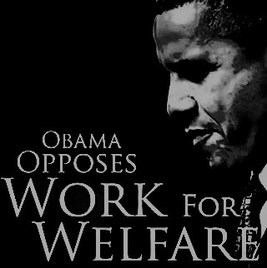
PictureRomney team runs crooked campaign ad.

To be fair, Mitt Romney has to lie about President Obama's position on work requirements for welfare. 

The President supports work requirements for welfare.  And that position doesn't match the phony image of Obama that Romney wants to portray. 


This was an easy calculation for Romney campaign staffers.  A lie that confirms a prejudice is more powerful than evidence that exposes the lie.  This particular ad is widely repudiated by nonpartisan fact-checkers, but its unique characteristics blunt the force of its poor ratings: the ad is officially sanctioned by Mitt Romney himself.  It is one of the most expertly-produced campaign ads of the season.  And it is exquisitely designed for a crude, passionate response.

A saving grace for reality, though, is the simplicity of this ad's fraudulence, and the accessibility of the truth.  The original document in question, a July 12 memo from the Department of Health & Human Services, a memo in which Mitt Romney claims President Obama "quietly removed the work requirements from welfare," is right here.

The ready availability of the memo presents a rare opportunity for voters to be their own fact-checkers.  As you read it, hold these facts in mind: 
  • Mitt Romney's ad states: "Obama gutted the welfare work requirement." 
  • As you will see, Obama simply turned that question over to the states. 
  • Mitt Romney's ad states: "I will restore the work requirements to welfare."
  • As you will see, there is nothing to restore.  The requirements are in place.
  • Mitt Romney, was one of the Republican governors requesting these waivers in May of 2005.  (Interestingly, the list also includes Mike Huckabee, Mitch Daniels, Mark Sanford, Tim Pawlenty, Jeb Bush, and Haley Barbour.)

Be your own fact checker.  Read the memo, watch the ad, then you tell me.
2 Comments

A Plea To My Fellow Liberals

7/20/2012

1 Comment

 
Picture
So much disappointment about Obama has been voiced on the Left that I wonder if Mitt Romney could be elected President, due not just to Right Wing, Anybody-But-Obama fervor, but to an infectious apathy among Democrats.  We are not as well mobilized this time around.  We have lost a lot of the energy needed to turn out voters.  It could happen.

I think we have this election under control.  But I don't think we can take it for granted.  We have to remember that it will still take all of us.  When Democrats are excited and willing to get moving, there is better attendance at the polls by voters who rely on the Party infrastructure for support.  The strength of involvement by middle-class liberals affects those who still need to be registered, need rides to the polls on election day, and, infuriatingly, need help getting the proper ID, a process that has to be in motion well before election day. 

So it matters that some of us seem so comfortable saying, "Meh.  I mean, sure, I'll probably still vote for Obama, but it's just not the same.  I'm not about to get out there and do the legwork this time around.  He hasn't earned it."  Right now this kind of passive support strikes me as a luxury of the relatively privileged liberal voter.  It shows a failure to recognize the Democratic Party as the historical, practiced, and practical champion of the disenfranchised voter.

Of course, how to vote, even whether to vote, and whether to campaign is absolutely the personal decision of every American citizen.  And campaigning involves a commitment of time and energy that individuals have to make based on their circumstances.

So I guess my plea is more that we at least be aware that the level of involvement we choose this time around does have consequences.  How much money we send in, whether we spend a few hours volunteering, and even how we talk about this election, all will have an impact on turnout on November 6th.

Again, it wouldn't be fair of me to presume to say how enthusiastic liberals should be about this President.  Some disappointment about his first term is understandable, although I consider it unrealistic, given the unprecedented level of obstruction by Congress we've faced. 

I just hope that folks on the left aren't being naive about what is really at stake.  I have been stunned to hear thinking people say that Romney and Obama aren't that different, or that, since the system is so flawed, it's almost not worth it to stay engaged, or that, since Obama doesn't seem to be the fighter they thought he would be, it doesn't feel important to actively get behind him - as if a Romney presidency would look roughly the same as a second term for Obama.

So in order to highlight some measurable, critical differences in what we would face under Romney, versus under an Obama second term, I'll offer here a quick list of things to contemplate.

  • The Affordable Care Act - Romney would use every executive power available to him to dismantle it. 
  • Veto Power, Part I: Romney would eagerly veto any legislation seeking to raise taxes on millionaires, continue funding for Planned Parenthood, advance clean energy initiatives, invest in infrastructure, maintain the Consumer Financial Protection Bureau or repeal the Defense of Marriage Act.  These are just off the top of my head.
  • Veto Power, Part II: If Obama is out of office, we lose his veto on a Farm Bill that makes brutal cuts to the Food Stamp program, legislation sure to come in 2013 to repeal the Voting Rights Act,  legislation to overturn Roe v. Wade, efforts to switch Medicare to a voucher program, proposals to cut funds for the Department of Education, and attempts to weaken Dodd-Frank.  Again, these are just to name what comes to mind immediately.
  • Foreign Policy Part One, Terrorism: If you don't like the use of drones under Obama, imagine Romney in action.  He has proven himself in many areas to be a secretive, opaque operator.  In the area of security, he's a bellicose hawk.  Now put those two qualities together...
  • Foreign Policy Part Two, Iran: Obama has insisted on a patient approach, taking flak for continued reliance on diplomacy and sanctions, standing firm.  Romney prefers bluster, and has shown absolutely no ability to stand up to Right Wing zealots.
  • Supreme Court and other federal judgeship appointments: we can't predict what seats will come open in the next four years. 
  • The Dream Act: forget it.
  • The Ryan Budget: accept it.
  • Citizens United: get used to it.

Regarding our basic economic structure:  Romney, like every business person in the US, benefits from the sound infrastructure we enjoy as a country.  He knows this.  And he denies it.  It is no more possible to prosper as a capitalist in a developing country, even where democracy struggles to exist, than in a communist country.  Mitt Romney has enough worldly experience to know this, but he is cynical enough to voice hostility to government and taxes, in a sweeping, holistic way. 

Like the most conservative members of his Party, he verbally disavows the very idea of the mixed economy in which he has succeeded.  Because citizens operating at his income level are the last to feel any pain from starving our infrastructure, they are willing to push that approach to its extreme, under the auspices of the idea that free-market profits will trickle down. 

Combining that economic ideal with his social conservatism, a Romney presidency would be little different in effect from having someone like Karl Rove, Grover Norquist, or Dick Cheney running the White House.  

If you want to, push Obama hard from the Left on issues you think he's ignoring.  But do it while he's in office, where he can do something about them.  Let's please, please, see what we can all do to keep him there four more years.
Picture
1 Comment

How about a little bit of both - on teaching folks to fish.

5/13/2012

9 Comments

 
Picture
Let's be fair and assume that conservatives and liberals agree on this; we should feed the hungry.  And that we all look forward to a time when fewer will face hunger.  The axiom "give a man a fish, he will eat for a day; teach a man to fish, he will eat for a lifetime" resonates with people from all political persuasions.  The majority of us even agree that the government has some role in providing that initial fish, if you will, so while we do argue about the scope of programs like food stamps, Medicaid, and Social Security, you don’t hear many calling to shut them down completely.

Most of us would also concur that in the long run, we’d rather teach someone to fish, allowing as many folks as possible to participate actively in our social and economic systems. 

You wouldn’t know it by listening to the zealots of any ilk, but most of us, across parties and ideologies, want the same things.  For example, you don’t find mainstream Republicans rejecting interstate roads, safety standards for pharmaceuticals, or a federal court system.  You won’t find most Democrats claiming they don’t enjoy material comforts, appreciate the entrepreneurial spirit, or want young people to aspire to their highest goals, whether that means becoming an artist or a wealthy CEO. 

Most of us, left or right, are neither radical socialists, or robber barons.  

It's when we we turn to the question of how to lift millions of poor-but-able adults out of poverty, our viewpoints do start to diverge.  What should we expect of the individual, despite their circumstances and external barriers to success?  What role should government play?  We know that escaping really tough beginnings is statistically unusual.  And I would hope most people know that many, many people in living in poverty labor hard to improve their lot - research bears that out as well.

Again extending the benefit of the doubt, I truly believe that most of us, left or right, want as many folks as possible to be happy, healthy, and productive.  There is plenty of altruism among every political sector, and there is also a healthy self-interest in seeing the country thrive.  So how do we get there?

The conservative “bootstraps” ideal clashes with the liberal “intervention” ideal, and, stoked by opportunistic punditry and entrenched suspicion, animus has flourished.  It’s a complex area, and stereotypes have evolved to the point of of mythology.  We default to lashing out, with “why can’t these people just get a job??” versus “why do you people hate the poor??”  We fall prey to cynical voices, shrieking that heartless conservatives want to eat caviar while hungry babies cry, or that smarmy liberals want feckless thugs to revel in lives of state-sponsored ease.  

In reality, it is possible for well-meaning people (to paraphrase the old saying) to differ on how to best teach someone to fish.

Some of the misunderstanding may come from of a lack of awareness about the differences between the kind of “situational poverty” that has come out of the recession, as opposed to the more prevalent “generational poverty” that has existed in the US for well over a century.  The most promising remedies to these two very different problems are not the same.  Add that to the fact that poverty is an emotional issue, and that our vocabulary about it has been ravaged by cable news and talk radio, and you have ordinary people with opposing viewpoints seeing each other as immoral lunatics.  

If we could tone down the demagoguery, we could learn to apply the best aspects of both approaches:
  • An authentic emphasis on job-creation and recovery could be applied to help those devastated by the economic collapse. 
  • Robust federal investment into ravaged communities could ease suffering from chronic poverty, and provide a way out.

While Republicans have been forced by a few into espousing radical theories, support for their classic ideas is widely distributed across ideologies.
Eliminating pointless and outmoded regulations allows businesses to use increased revenue to hire more people.
Tax breaks for small business encourage new ventures and expansion of existing operations. 
Federally-funded social programs should be accountable and transparent, and evaluated for effectiveness. 
Without the right formatting, ample assistance programs run the risk of encouraging dependency.

Democrats have been pushed to fight tooth and nail to protect basic entitlements, so their demands may have come to sound strident and one-dimensional.  But the desire is not to simply truck in endless supplies of free goods and services to poor communities, achieving nothing but stasis.
The desire is to provide training, skills-building, support services, encouragement, and access to opportunity, to people who aren’t getting it elsewhere. 
The idea is that people naturally want to better and support themselves. 
That social programs are an investment. 
That by funding the teaching of literacy, job skills, effective parenting, family-budgeting and health management, the country will profit from a stronger and more productive citizenry.  

In any case, we’ll need to re-learn how to work together as soon as possible, because the country can only afford so much fish.

9 Comments

SENATE ACTION ALERT

3/1/2012

0 Comments

 
Picture

Take a quick minute now to make sure your US Senators know you are against the Blunt Amendment!

S.1467 -- Respect for Rights of Conscience Act of 2011
Today Senators Roy Blunt and Marco Rubio will bring a bill to the Senate floor allowing all employers -- not just religious organizations -- to deny insurance coverage for birth control and any other medical service they find "morally objectionable."

Action Step: go to senate.gov and email or call your two US Senators.  It only takes a minute, and yes, they do read your emails and listen to your calls! 

For more on what's so bad about the Blunt amendment, check out these excellent blog posts on the National Women's Law Center website.

0 Comments

2012 State of the Union

1/25/2012

0 Comments

 
Picture
Picture
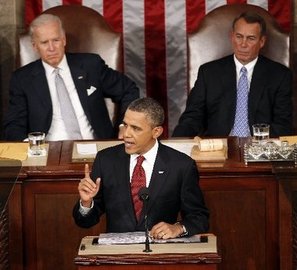
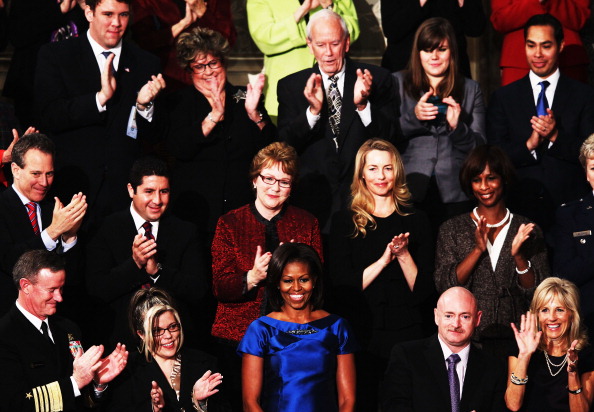
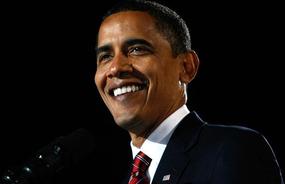
Left, Barack Obama delivers 2012 State of the Union address to Congress. Flanked by Vice-President Joe Biden on top left and Speaker of the House John Boehner (R-OH), top right. Above, First Lady Michelle Obama surrounded by guests.
_Top notch State of the Union address.  I have a feeling it will go down as the most unapologetically liberal in decades.  It outlined what liberals REALLY want, contrary to the simplistic stereotypes.  Most of us, and obviously our President, want this:

1. A strong defense that focuses on intelligence, targeted strikes, and reduction of ground troop levels.  A vigorous reliance on diplomacy, sanctions, and support for grassroots democracies.

2. Reform of regulations so that we keep important controls and accountability in place, but get rid of useless and silly ones.  (eg, spilled milk)

3. Principled capitalism.  By now conservatives should know/admit that we aren't looking for economic socialism.  There are millions of successful liberal business people, investors, entrepreneurs, wealthy folks, and just middle class Americans who love living in an upwardly mobile country with a marketplace.  We just want an ethical marketplace; fair trade, regulated banking and lending, investors that have to take on legitimate risks or pay the consequences out of their profits, freedom for workers to organize, and companies that recognize the value of providing high wages and good benefits.  And of course, an equitable tax code.

By definition, capitalism drives people or commercial entities to maximize profits at every turn.  This drive is a good thing - it leads to innovation, industry, and success.  There are two ways to ensure that this drive doesn't create an environment in which bad business practices flourish - practices like deceit and obfuscation, cutting corners with safety and quality, or hiding assets and illegally protecting against risk.  One way to counteract that is for the entrepreneur or business to operate in an ethical way, and be creative about how to both make money and exemplify American values.  This business model is used all over the country by many, many successful companies, which have proven it can be done.  Conservatives should join progressives who promote these businesses, as they are our best hope for reducing government oversight and intervention, which, surprise surprise, even liberals would be happy to see.  But in the absence of this kind of self-control, we have to use the second tool: government oversight.  Some businesses will always put profit above any principle, and their excesses and pillaging damage the economy and ruin lives. 

4. A commitment to robust government support and intervention in challenged areas, like education, infrastructure, science, health care, and clean energy.  Conservatives refuse to see the long-term value of investing generously to achieve excellence in these areas.

5. Job creation.  The government can play a crucial role in this area, especially in tough times.  The so-called private job creators are sitting on their money right now, and justifying that with the circular logic that when the economy improves, they will start investing in the economy again.  Meanwhile, a country with our resources is lucky enough to be in a position to use tax dollars to put people to work.  It's absurd not to do that when it would improve our situation so quickly, thus providing away for private enterprise to take back over.  Another area in which, surprise surprise, liberals would LOVE to see the need for government intervention to disappear.

6. A strong safety net.  Conservatives confuse the commitment to a sturdy system of life-support for the poor with an economic policy.  We don't want government benefits instead of more jobs!  What an interesting argument the country is having about this right now.  We are seen as wanting to coddle the poor and instill dependency.  Of course not, that isn't a goal, it is a provision of sustenance.  This food stamp discussion...  If it were up to me, we would expand the food stamp program.  Everyone is not fed right now
.  Charities, churches, food banks, Meals on Wheels, etc., are trying their best to supplement food stamps, but they cannot be expected to solve a problem on this scale.  There is no excuse for a country this wealthy to let people go hungry - it is shameful.  It isn't a solution - no one is saying that.  We must simultaneously work on improving the economy.  Whether you agree or disagree with any current President's approach to economic recovery, you don't just leave hungry people in the lurch?  Many, MANY kids eat their best two meals of the day at school.  When you work with troubled kids from poor families in schools, you know that one thing that keeps them coming to school everyday, for better or worse, is that they get to eat two hot meals that day.  You shudder knowing that on weekends, holidays, and summer vacation, they aren't getting as much.  Painting any President's support of a substantial food stamp program, pretending it is a substitute, in his mind, for economic recovery, is a false narrative designed to elicit a cheap, uninformed, emotional response.

It's interesting to hear the reactions to the State of the Union speech today.  You have to translate sometimes - let me offer a cheat sheet.  Republicans can't say they liked an idea put forth by Obama.  To ferret out their approval, note when they say:
  • He says that, but he doesn't mean it.  It's all just pretty talk.
  • He should have said that a long time ago.
  • He's only saying that to get reelected.
0 Comments

It's time to herd the cats.

12/7/2011

3 Comments

 
Let's get in campaign mode - maybe it will even be fun!  Obama added a little enticement in his speech in Osawatomie, Kansas yesterday.  Newsflash: he's not planning to try to do this without the base.

A great thing about the left is the diversity of our viewpoints.  The forceful voices of the most radical are indispensable in keeping our leaders honest and pulling them from the natural centrism of most successful politicians.  But the reality is that first term Presidents in America have to fit governing in with politicking, instead of the other way around.  So when we get someone who will substantively - if not perfectly - promote liberal values, we need to facilitate a second term.  There we can expect to see bolder action on progressive initiatives.  The good news with Obama is, I don't think that's going to be such a bitter pill to swallow.
 
Picture
Yesterday he made a speech in Kansas that sounded like a bellwether.  I was impressed with the clarity of the liberal vision he espoused.  For all the hand-wringing about his socialistic tendencies for the right, we on this side know Obama is no revolutionary. 

My friends and readers know that's fine with me - I want an arbitrator and diplomat in the White House.  Partly because I know we are unlikely to ever see a radical leftist there.  But partly because I'm not sure that "US Commander in Chief" is the most appropriate office for a radical of any brand to hold. 

But even my compatriots who are purer in philosophy than I am should be able to get excited about reelecting Obama if he keeps talking like he did yesterday.

It was a long speech.  I have provided copious quotes here; passages that illustrate philosophy and policy positions.  For the examples, details, supporting information, and statistics Obama used, read the whole speech here, or watch it here.
  • "...this is not just another political debate. This is the defining issue of our time. This is a make-or-break moment for the middle class, and for all those who are fighting to get into the middle class. Because what's at stake is whether this will be a country where working people can earn enough to raise a family, build a modest savings, own a home, secure their retirement. Now, in the midst of this debate, there are some who seem to be suffering from a kind of collective amnesia. After all that's happened, after the worst economic crisis, the worst financial crisis since the Great Depression, they want to return to the same practices that got us into this mess. In fact, they want to go back to the same policies that stacked the deck against middle-class Americans for way too many years. And their philosophy is simple: We are better off when everybody is left to fend for themselves and play by their own rules."
  • "...this isn't the first time America has faced this choice. At the turn of the last century, when a nation of farmers was transitioning to become the world's industrial giant, we had to decide: Would we settle for a country where most of the new railroads and factories were being controlled by a few giant monopolies that kept prices high and wages low? Would we allow our citizens and even our children to work ungodly hours in conditions that were unsafe and unsanitary? Would we restrict education to the privileged few? Because there were people who thought massive inequality and exploitation of people was just the price you pay for progress."
  • "(Theodore) Roosevelt disagreed.  He knew that the free market has never been a free licence to take whatever you can from whomever you can. He understood the free market only works when there are rules of the road that ensure competition is fair and open and honest. And so he busted up monopolies, forcing those companies to compete for consumers with better services and better prices. And today, they still must. He fought to make sure businesses couldn't profit by exploiting children or selling food or medicine that wasn't safe. And today, they still can't.And in 1910, Teddy Roosevelt came here to Osawatomie and he laid out his vision for what he called a New Nationalism. 'Our country,' he said, 'means nothing unless it means the triumph of a real democracy … of an economic system under which each man shall be guaranteed the opportunity to show the best that there is in him.'  Now, for this, Roosevelt was called a radical. He was called a socialist – even a communist. But today, we are a richer nation and a stronger democracy because of what he fought for in his last campaign: an eight-hour work day and a minimum wage for women, insurance for the unemployed and for the elderly, and those with disabilities; political reform and a progressive income tax.
  • "...there is a certain crowd in Washington who, for the last few decades, have said, let's respond to this economic challenge with the same old tune. "The market will take care of everything," they tell us. If we just cut more regulations and cut more taxes – especially for the wealthy – our economy will grow stronger. Sure, they say, there will be winners and losers. But if the winners do really well, then jobs and prosperity will eventually trickle down to everybody else. And, they argue, even if prosperity doesn't trickle down, well, that's the price of liberty.
    Now, it's a simple theory. And we have to admit, it's one that speaks to our rugged individualism and our healthy skepticism of too much government. That's in America's DNA. And that theory fits well on a bumper sticker. But here's the problem: It doesn't work. It has never worked. It didn't work when it was tried in the decade before the Great Depression. It's not what led to the incredible postwar booms of the 50s and 60s. And it didn't work when we tried it during the last decade. I mean, understand, it's not as if we haven't tried this theory."
  • "We simply cannot return to this brand of "you're on your own" economics if we're serious about rebuilding the middle class in this country. We know that it doesn't result in a strong economy. It results in an economy that invests too little in its people and in its future. We know it doesn't result in a prosperity that trickles down. It results in a prosperity that's enjoyed by fewer and fewer of our citizens."
  • "...gaping inequality gives lie to the promise that's at the very heart of America: that this is a place where you can make it if you try. We tell people – we tell our kids – that in this country, even if you're born with nothing, work hard and you can get into the middle class. We tell them that your children will have a chance to do even better than you do. That's why immigrants from around the world historically have flocked to our shores.And yet, over the last few decades, the rungs on the ladder of opportunity have grown farther and farther apart, and the middle class has shrunk. You know, a few years after World War II, a child who was born into poverty had a slightly better than 50-50 chance of becoming middle class as an adult. By 1980, that chance had fallen to around 40%. And if the trend of rising inequality over the last few decades continues, it's estimated that a child born today will only have a one-in-three chance of making it to the middle class – 33%."
  • "(This is) not a future that we have to accept, because there's another view about how we build a strong middle class in this country – a view that's truer to our history, a vision that's been embraced in the past by people of both parties for more than 200 years. It's not a view that we should somehow turn back technology or put up walls around America. It's not a view that says we should punish profit or success or pretend that government knows how to fix all of society's problems. It is a view that says in America we are greater together – when everyone engages in fair play and everybody gets a fair shot and everybody does their fair share."
  • "The truth is we'll never be able to compete with other countries when it comes to who's best at letting their businesses pay the lowest wages, who's best at busting unions, who's best at letting companies pollute as much as they want. That's a race to the bottom that we can't win, and we shouldn't want to win that race. Those countries don't have a strong middle class. They don't have our standard of living.The race we want to win, the race we can win is a race to the top – the race for good jobs that pay well and offer middle-class security. Businesses will create those jobs in countries with the highest-skilled, highest-educated workers, the most advanced transportation and communication, the strongest commitment to research and technology."
  • "...we need to meet the moment. We've got to up our game. We need to remember that we can only do that together. It starts by making education a national mission – a national mission. Government and businesses, parents and citizens. In this economy, a higher education is the surest route to the middle class. The unemployment rate for Americans with a college degree or more is about half the national average. And their incomes are twice as high as those who don't have a high school diploma. Which means we shouldn't be laying off good teachers right now – we should be hiring them. We shouldn't be expecting less of our schools –- we should be demanding more. We shouldn't be making it harder to afford college – we should be a country where everyone has a chance to go and doesn't rack up $100,000 of debt just because they went. In today's innovation economy, we also need a world-class commitment to science and research, the next generation of high-tech manufacturing. Our factories and our workers shouldn't be idle. We should be giving people the chance to get new skills and training at community colleges so they can learn how to make wind turbines and semiconductors and high-powered batteries. And by the way, if we don't have an economy that's built on bubbles and financial speculation, our best and brightest won't all gravitate towards careers in banking and finance. Because if we want an economy that's built to last, we need more of those young people in science and engineering. This country should not be known for bad debt and phony profits. We should be known for creating and selling products all around the world that are stamped with three proud words: Made in America."
  • "...we have to rethink our tax system more fundamentally. We have to ask ourselves: Do we want to make the investments we need in things like education and research and high-tech manufacturing – all those things that helped make us an economic superpower? Or do we want to keep in place the tax breaks for the wealthiest Americans in our country? Because we can't afford to do both. That is not politics. That's just math...so far, most of my Republican friends in Washington have refused under any circumstance to ask the wealthiest Americans to go to the same tax rate they were paying when Bill Clinton was president."
  • "This isn't about class warfare. This is about the nation's welfare. It's about making choices that benefit not just the people who've done fantastically well over the last few decades, but that benefits the middle class, and those fighting to get into the middle class, and the economy as a whole.
    Finally, a strong middle class can only exist in an economy where everyone plays by the same rules, from Wall Street to Main Street. As infuriating as it was for all of us, we rescued our major banks from collapse, not only because a full-blown financial meltdown would have sent us into a second Depression, but because we need a strong, healthy financial sector in this country.  But part of the deal was that we wouldn't go back to business as usual. And that's why last year we put in place new rules of the road that refocus the financial sector on what should be their core purpose: getting capital to the entrepreneurs with the best ideas, and financing millions of families who want to buy a home or send their kids to college.  Now, we're not all the way there yet, and the banks are fighting us every inch of the way. But already, some of these reforms are being implemented... (T)he vast majority of bankers and financial service professionals, they want to do right by their customers. They want to have rules in place that don't put them at a disadvantage for doing the right thing. And yet, Republicans in Congress are fighting as hard as they can to make sure that these rules aren't enforced."
  • "We still have a stake in each other's success. We still believe that this should be a place where you can make it if you try. And we still believe, in the words of the man who called for a New Nationalism all those years ago, 'The fundamental rule of our national life,' (T. Roosevelt) said, 'the rule which underlies all others – is that, on the whole, and in the long run, we shall go up or down together.'  And I believe America is on the way up."


3 Comments

Voter ID Laws - What if? 3rd in a series

11/20/2011

3 Comments

 
Picture
What if proponents of the strict new voter ID laws sweeping across the country had simply said, “Look, states need to require some sort of easy to obtain form of voter ID”?  What if they had said, for example, “Voters need to bring in their voter registration card every time they vote”?  Would anyone have had a problem with that?

Some states have always allowed voters to just show up, sign in and vote.  But what if Republicans pushing voter ID laws had simply asked for such states to start using a voter registration card?  Would there really have been much of a complaint by us self-appointed watchdogs of constitutional rights?  There's no missing your voter registration card - it comes in the mail a couple of weeks after you register.  For those who may have lost theirs years ago, reissuing new copies would cost a fraction of the implementation of the new laws.  I don’t see why we couldn’t have gone along with that_

What if all states started asking voters to check in at the polls with one of the various forms of ID used by many states now – forms that include just about any sort of paperwork that says hey, I really am Julie Boler, and I'm fixing to vote.  Voters can use bills or medical records, a pay stub or work ID, a Medicaid card, a debit card; basically any document or ID card that shows your name. To have to start doing that now when they didn’t before, that would be part of life for most people – not even cause a ripple.Instead, the states that don’t require anything are enacting new requirements, the more flexible states are scrambling to switch up to more demanding requirements, and the already strict states are outdoing themselves in the narrow list of acceptable forms.

Why?

The strict states, which may ultimately set the tone for the rest of the country if they pass the Constitutionality tests, require the kind of ID that asks you to jump through hoops to acquire.  You'll need time off work, sometimes more than one day to get to more than one agency, and have to deal with transportation, fees, and that eternal catch-22 of needing documentation to get the documentation you need at various places.  You may have a long wait at each stop.  If you live in a rural area, are elderly or sick, care for a family member or have small children in tow, or have trouble getting access to transportation, you are going to have a tough time getting what you need before you even get to the state agency that issues photo ID’s.   And if you haven't had to gather vital records for a state-issued ID since 9/11, you may not know that they have consciously added some hoops to the process in some areas.  These steps must be taken – under these new laws, before you can exercise your constitutional right to vote.

What if proponents of the new laws had been able to offer ANY compelling evidence of a need for the new laws, perhaps at least making the hoop-jumping feel warranted.  (They have done the opposite, demanding evidence for why we shouldn’t have these laws…)

What if they hadn't tried to convince people that there is any kind of voter fraud that can be prevented with a strictly-defined, official form of state-issued photo ID, that can't also be prevented by presenting a Medicaid card or pay stub?  What if they didn’t attempt to blur the lines between different types of election fraud so that people would think that an ID card could stop a corrupt precinct captain from duplicating ballots after the polls had closed?   What if they hadn't purposely confused real threats to a secure ballot, like absentee voter fraud, and corrupt election officials, with the nonexistent risk of an election being thrown by random, isolated irregularities?

Maybe there would be more trust now.

What if these zealots had forthrightly acknowledged their responsibility under federal law not to place an obstacle in the path of any voter making their way to the polls?

What if they hadn't been so gleeful about their ability to kick start this legislation in some states so quickly that if it survives legal challenges it will just happen to be in place by the 2012 elections?  Or if they had at least justified this urgency with evidence of a problem needing to be solved?

What if they had allowed the horse to walk calmly ahead of the cart; addressing issues of access first.  What if they had studied the impact the laws would have to ensure they were in compliance with the Voting Rights Act.  What if they’d been proactive (beyond saying, “Hey, we’ll make these cards free!”) in evaluating state government systems, so that they would be in compliance BEFORE the new law.  We certainly couldn’t have wondered “why the rush” if there was no rush!

What if they hadn't sent out one red herring after another:
  • Well, you need ID to buy beer or rent a car!" comparing access to consumer goods and services to access to your constitutional right to vote.
  •  "Even homeless people have to carry ID to get benefits," calling forth a parallel hardship as though it is a justification for a similar hardship
  • "What is the big deal about this?  Why does it matter so much?  Why are you going on about it?"  To be clear, this is a group of people moving a freight train across the country, apparently hell bent on getting new voter ID laws in place in time to effect 2012 elections, asking those on the sidelines questioning the process and hoping to slow it down, why they are making such a big deal about this.
  • “Come on, are there really that many people this would affect?” Research from a variety of sources averages out to an estimate that over 20 million – about 11% - of voting age Americans do not possess the official state-issued photo ID required in a rapidly growing number of states.
What if Republicans had minded all these p's and q's, approached this with realism and integrity, and basically asked if voters couldn't just start using their voter registration cards consistently? 

We probably wouldn't have batted an eye.

We jaded lefties probably wouldn't have been so suspicious about motives. We might have said, "okay, fair enough, but let's just make sure everyone hears about the new change in time to vote, and that they remember to bring their card with them, and by the way, do you need a ride to the polls?”   If the voter ID supporters really felt this was an issue, they could have approached it in good faith, engendered trust, and we could all have found a way to make everyone happy.

Instead, conservative Republican office-holders, candidates, and advocacy groups have churned across the country enacting the strictest voter identification laws ever seen in this country since poll taxes and literacy tests. 

If they hadn't, we might not have felt the need to respond.  We might not have felt the need to rouse some folks, like the Justice Department, the ACLU, the National Democratic Party, the NAACP, the AARP, the League of Women Voters, the Mexican American Legal Defense and Education Fund, the Congressional Black Caucus, the Progressive States Network, the Fair Elections Legal Network, Project Vote, and.... 

Well it turns out there are a whole bunch of people not happy about these laws. Regardless of the outcome in the courts, I hope that those who first started pushing them meant it when they said that all they want is for as many eligible voters as possible to come out and vote, fair and square; because that's what they can expect in 2012.

3 Comments

Yes, they DO read your letters!

11/19/2011

0 Comments

 
Picture
Do you ever write to your Senator?  Have you ever called the White House?  How often do you sign your name to those email petitions?  Once you've elected a representative, stay in touch  with email, phone calls, or letters.  They do pay attention, and they even respond. It's easier than ever to bend the ear of elected officials.  Say you become enraged watching a story on Good Morning America.  You want to speak out, but you're unsure who your representative in Congress is or even what district you live in.  These days, you can locate that information in a few keystrokes, hit send on an impassioned plea, and be out the door in time to beat traffic.

Where does your email go from there?  Not into a black hole.  Turns out, your email will go straight into the inbox of a staffer, who will summarize your specific concern for your representative.  If it comes in on a wave of similar messages, it will still be read, and will be logged into a database used to track constituent communications.  If it is an especially powerful message, by the time you are clocking out at work, your Senator may be reading your letter.

I wondered how it really works on the receiving end.  What happens to email when it reaches the office of your elected official?  Is it easy to reach out to local officials as well?  I wondered about this process, and wanted to find out for myself.  I wondered if officials in local government were more likely than those on the national level to follow up with citizens personally.  I imagined emails being sorted by a computer keyword scanner of some kind, or sinking to the bottom of an inbox with thousands of messages.  I was certain that communications sent to the President must be screened by White House staff in so many layers that it must be almost pointless to write in.  I decided to find out how all that works, and I started right at the top. 

I’d heard that this President personally reads ten letters from constituents a day, and responds by hand to three or four. According to an ABC News online report, the White House receives over 100,00 emails and letters a week.  Staff, volunteers and interns whittle them down.  They forward specific requests for information or assistance to the appropriate department or agency, and of course they pass threats along to the Secret Service.  A New York Times article in 2009 profiled Mike Kelleher, White House Director of Correspondence.  Kelleher heads up the process of sorting and analyzing letters from which the ten letters a day are pulled to land on Obama’s desk.  After screening and sorting is done by other staff, Kelleher carefully considers roughly one hundred letters and emails per day.  He looks for those that are representative of the bulk of in-coming mail, or those that pertain to current pressing issues, or those with a powerful personal story.  Ten of those make it into the hands of the President.

But what about more ordinary but still heartfelt questions and concerns?  Not every American citizen has an earth-shattering story to tell, but we all want to have a voice.  I decided to pick up the phone and place a call to 1600 Pennsylvania Avenue, to find out how my call would be routed, and see I would at least be able share my opinion about an issue in a voice mail message.  I easily found a number on the White House website, and punched it in.  It was quickly answered with a recording asking me to hold for a volunteer operator.  A person?  That would be a bonus.  I noted the time, and in four minutes – four minutes! I was connected with a polite and very professional woman ready to take my question.  I told her I was writing an article about voter access to elected officials, and wanted to know how it works when someone calls or writes in to the White House.  I told her I was surprised to hear a live voice on the other end.  She gave me the verbal equivalent of a courteous smile – I imagine I wasn’t the first caller to note that surprise. 

The volunteer was very helpful.  She explained that every call is logged, every email read, all letters reviewed, even faxes are received, and all of these messages are entered into a database of opinions and concerns.  Everyone gets a response.  An email will generate a return email from The White House, touching on whatever issues were raised and describing the President’s position.  I don’t imagine most Americans know that typing whitehouse.gov in a search field will take you so quickly to contact information for the President’s staff, or that every time you share a comment or concern, someone will collect that information and log it into a database.

I charged ahead and phoned one of the in-state offices of US Senator Kay Hagan (D-NC).  A staffer there explained that the Senator receives thousands of communications a week, by email, phone, fax and mail.  They are divided into two types.  One type is labeled casework and includes personal requests for assistance navigating federal agencies like the VA, Social Security, or Immigration.  Casework requests go promptly to senior staff for initial problem solving, then on to Hagan herself.

Senator Hagan also receives communications from voters registering their views on issues and policies affecting the state.  These calls and letters are treated with great importance.  According to the staffer, each and every one is considered significant, and is carefully reviewed.  They are read by members of the communication team and logged according to topic and point of view.  The staffer indicated that Hagan looks forward to reading individual letters pulled by staff to call attention to the general course of response to issues.  He emphasized that there are never emails or letters that go unread, and everyone gets a response.

David Ward, Communications Director for Senator Richard Burr, (R-NC), reflected the same level of priority placed on constituent communication in their office.  It was interesting to find the the Director so accessible to answer my questions about voter access to Senator Burr.  I had simply placed a call to a number I found on the Senator’s website, and explained to an office assistant that I had a few questions for an article I was working on.  Within a couple of hours I received an email from Ward providing me with his name and direct line. 

According to Ward, the bulk of communication from constituents these days arrives in email form.  Those seem to be the easiest for voters to send, and are easy for his office to categorize and respond to.  Postal letters are always welcome, he said, but voters should know that they take a little longer to reach Senate offices than they used to.  Ward explained that since the anthrax crisis following 9/11, postal mail has been routed to an outside agency for screening before it arrives on Capitol Hill.  Once there though, it is treated with interest and importance, and like distinctive emails, may end up directly on Senator Burr’s desk.

“We do read every piece of mail, and listen to every call,” Ward stated.  “We have staff in North Carolina that respond to casework, and we have other staff who manage concerns about pending legislation.”  Ward acknowledged when asked that the Communications staff can tell when an advocacy group has initiated an "email blast".  Even when they are sent from individual email addresses, these come in waves and often have identical wording.  But I was interested to find that they are really tracked no differently from comments that come in a more personalized form

Like Hagan, Senator Burr places a high premium on hearing from North Carolina residents.  His team pulls out letters that are exceptional or representative of a trend in opinions, and the Senator may have them in hand before he leaves the office at the end of the day.

US Congressman Brad Miller, (D NC-13) the House Representative for my own district, recently received honors for his top-notch accessibility processes from the Congressional Management Foundation, a nonpartisan organization dedicated to evaluating and improving communication between citizens and Congress.  Miller received their 112th Congress Bronze Mouse Award, commending him for “educating citizens and achieving the highest degree of transparency and accountability in online communications.”  CMF believes that each visitor to a Member’s website is like a citizen arriving at their office door, providing an opportunity for the Member to “enlighten and serve (the) constituent.”  The Miller site (bradmiller.house.gov) is the picture of best practices, providing links to Miller’s voting records, legislation he has sponsored, and clear positions on issues.  It is also attractive, welcoming, and easy to navigate. 

Ajashu Thomas, in Miller’s Washington office, informed me that already this year they have received over 34,000 communications.  They come by fax, phone, email and post, and each one is entered into a central database.  They are each responded to individually.  Thomas explained that Congressmen Miller’s staff, like those in the office of other Members, provides direct responses only to correspondence from the people Miller serves in District 13, but as a courtesy between Members of Congress, when they receive communications from citizens outside the district, these are forwarded to the appropriate Congressional colleague.  Thomas informed me that as with Burr's office, Miller's does not separate individual emails from those that come in as group mailings.  They do try to prioritize getting a timely response to people who have not been communicated with before, versus those with whom they have corresponded multiple times.     

So far this expedition had yielded terrific results, but when I turned to the local level, I experienced a mixed bag of access and responsiveness.  While the volume of communications there may be lower, so apparently is the level of staffing and infrastructure.  Based on what I encountered, I wondered if under-staffed local government officials find that dedicating significant resources to correspondence yields diminishing returns. 

Earning the highest marks was the State Senator who represents my district, Josh Stein (D- Dist. 16).  I had written Senator Stein an email in September regarding his vote on a contentious state issue, and had received an acknowledgement within hours, so I was optimistic.  When I wrote him again for this article, his response came quickly again.  Receipt of my email was acknowledged immediately by Stein himself, and within the week I had received a thorough and helpful response. 

Senator Stein shared that his policy is to answer letters with letters, email with email, and calls with calls.  In addition, he frequently meets with constituents face-to face.  While Stein always responds personally when asked for by a caller, he employs his staff to problem-solve miscellaneous casework.  Mass emails receive a prepared response; individual communications garner a unique response.  This system of responding in like-style seems fair and realistic.  The voter gets out of it whatever is put in, and the form-letter-to-form-letter approach frees up time to engage more personally with those who do the same. 

Stein feels that these communications – in every form – are critical.  He values input on pending legislation, and says that as his charge is to represent the needs of his district, he relies on knowing clearly what they are. 

My most frustrating experience occurred when I tried to reach a staff person in the mayor’s office.  First, to the casual user the city website is fairly opaque.  There was an "about town" feature highlighting the mayor's activities - this looked like an ongoing piece, but it didn't link directly to his office.  Sidebars offered information about very specific citizen concerns, but no general “contact us” information.  With a couple more clicks I eventually found a number, but that turned out to be the easy part!  The same questions that had been enthusiastically answered by staff at the White House, the US Congress, and the NC Senate, when presented to the mayor’s office, were treated with suspicion. 

I explained that I was doing research on the processes elected officials use to keep in touch with constituents and respond to their questions and concerns.  There was a pregnant pause, and a long hold while I was switched to another staff person.  No problem, I thought, and I repeated my initial question.  I was asked what I was “getting at”; what was “behind” my questions.  I became extra-friendly, and elaborated that I was writing a non-partisan, objective piece about voter access to elected officials, and wanted to know how this mayor or his staff receives, sorts, and responds to mail, calls, and email.  I was asked to “be more specific about what kind of information” I was looking for.  I explained that it was really nothing more than what I had already said, just wanting to get an idea of how they screen and sort mail, whether they have someone assigned to that task or who it might fall to, and a question about volume.  The staffer again balked, curtly saying she would "need to know what direction (I was) going in with these questions before answering them. 

Stumped, I cut my losses by asking her if email was a good way to reach the mayor’s office, she said yes, and we ended the call.  This was probably an issue of poor job performance more than anything, but I also may have hit the spot here where preparation, training, and resources do not match reasonable expectations for citizen access. 

Seeking to go one step more local, I saved my last evaluation for the accessibility of my school board representative.  I would call this my most challenging but ultimately rewarding exchange.  As my district’s representative during a divisive two-year term, Keith Sutton had done a super job navigating through some complex situations and tough public meetings.  I wanted to help him get reelected. 

I was conscious of the fact that even before I was working on this article, I'd had a little trouble reaching Sutton.  I had sent him an email a couple of months back, with a question about an issue that was before the board.  I had never heard back, but I wrote again once the campaign season had kicked in, letting him know my previous question could wait, but hey, where could I get some yard signs?  No response, so I figured he was bogged down.  I found a campaign website and used their online form to volunteer.  I didn't get a follow-up call or email within a week, so I repeated the signup process and still got no response.  Getting curious and a little frustrated, I located Sutton's work phone number online and left a couple of voice mail messages, pointing out nicely that he should probably get back to me soon, as after all, I was trying to volunteer!

Time passed, and Sutton was reelected easily.  I had begun work on this article so my mission now developed into a quest to understand what had preventing me from reaching him as either a constituent or a supporter.  Feeling like a stalker now, which we joked about once we finally spoke, I resorted to leaving Mr. Sutton two messages on facebook.  This at last yielded an email response with an invitation to call and the best number to use. 

I won't give Mr. Sutton a complete pass for the prolonged lack of communication.  But after we spoke, I can say he did an excellent job of painting a picture of what might have gone wrong.  He was very receptive and apologetic, and voiced his intent to take a look at those processes. 

Sutton shared a little about what it takes to represent 100,00 people in a school district.  Aside from fulfilling the requirements of a sitting member of a very high profile school board and running for reelection to that position, he holds a demanding full-time job.  He confirmed what I had suspected – it is up to him alone to respond to nearly all of his correspondence.  He did have a volunteer spending a few hours a week managing his website and other campaign responsibilities, and he promised to look into the disconnect on the two efforts I made to volunteer there.  But he is usually on his own with emails and phones calls, and it can be tough to keep up with.  Sutton was very approachable on this phone call, took full responsibility for the breakdown, and had me wanting to come clean out his inbox by the end of the conversation.

At the local level, communication volume-to-staff ratio can be almost untenable.  But citizens can push representatives to do what they have to do to stay engaged and responsive.

My research into this topic was heartening.  There is no question elected officials take constituent communications seriously.  While that should go without saying, there is a public perception that letters are tossed on a pile to languish, that office-holders don’t pay attention to mass emails from advocacy groups, and that – especially at the highest level, correspondence will be intercepted by staff and the actual elected official will never see them.  While there is an element of truth to some of these assumptions, I was cheered to find out how much of that perception is not true.  In all offices but that of Raleigh's mayor, the spirit displayed is neither nonchalant or dismissive.   From the state legislature through the US Congress to the White House, it is clear that every piece of communication that comes in is read, and that the more effort the voter puts in to the communication, they more likely it is to make its way to the desk of the official.
 
Most remarkable is the ease with which voters can interact with office-holders.  Using websites like whitehouse.gov, senate.gov, and house.gov can take you from not knowing who represents you to the right name and contact information, to a user-friendly email form, to the exhilaration of being heard.  I can't imagine a more empowering feeling for a citizen in a democracy to have than to know that your stated opinions can end up on a desk on Capitol Hill, and have an impact on the law of the land.


0 Comments

Voter ID - don't believe the hype. 2nd in a series

11/9/2011

0 Comments

 
Picture
Conservatives are clamoring for rigid voter ID laws.  State by state, they are proudly shepherding in strict procedures that require voters to prove their identity at the polls by producing specific, narrowly-defined forms of government-issued photo identification. Nothing in a democracy is more important than a secure ballot. But real election fraud involves coordinated tactics like falsifying absentee ballots, casting ballots for deceased voters, buying votes, counterfeiting registrations, and duplicating votes.  Widespread irregularities like these can only be prevented by comprehensive protections maintained with the vigilance of honest officials, technical security measures, and oversight by governing bodies, including the FBI and the Justice Department.  Conservative politicians will tell you that the laws don’t impose a hardship.  They will tell you they are needed to prevent election fraud. 

When you hear these specious claims, keep the facts in mind:
  • There is no evidence of the type of fraud that would be prevented with stricter voter ID.  Election results are threatened by organized schemes to subvert them, not random cases of one voter impersonating another.
  • If the goal is to protect against chance irregularities, less restrictive requirements used by some states would suffice.  These allow voters to establish identity with voter registration cards, medical cards, bank cards, recent utility bills, or pay stubs.
  • Requiring strict, government-issued photo ID, presents a hardship for hundreds of thousands of voters. 
In order to be issued an official government photo ID, multiple documents must be obtained from a variety of agencies.  These may include original birth certificates, Social Security cards, school records, tax records, or property records.  Some combination of these must be presented in person by the voter just to secure the qualifying ID.  These documents are maintained at different agencies, most of which are only open weekdays and often require long waits.

It can take several trips to gather this documentation, making it hard for working class voters to get the time off work.  It may be hard for rural or low-income voters to arrange transportation.  Elderly, sick, and disabled voters may have difficulty.  Proponents will point out that the new laws have provisions to make these IDs easier to obtain, but this is coming from the same people who seem to have no sense of what kind of hardship these laws impose. 

It can be done.  And make no mistake, if these laws survive legal challenges, caring citizens will mobilize in response and help those who don’t have them get the forms of ID they need.  But they shouldn’t have to.  These laws affect people who in some cases have been dedicated voters for many years, and have always known that to cast their ballot they just had to get themselves to the polls on Election Day.  Some of them know their precinct workers on sight.  Some of them remember when people took their lives in their hands to try and vote, and now we are saying to them, you have to get some documentation before you come in here and try to vote.  They have been described by some as not wanting to go to the trouble to obtain the proper ID. 

Here is where things stand now:
 
20 states* and DC currently require no ID to vote.  Voters provide their name and address and are given a ballot.

16 states* allow these forms of ID: voter registration card, utility bill, student ID, work badge, Social Security card, pay stub, medical card, public assistance card, birth certificate, tribal ID, military ID, driver's license or state ID card.

(That's 36 states that require either easily accessible forms of ID, or none.  Where are the cases of elections skewed by individuals impersonating other voters?  When have impersonators used utility bills to fool poll workers, and would have been thwarted if only they’d had to present a photo ID?)

7 states * require a photo ID, but will accept the following alternatives to government issued forms:  debit or credit card with photo, retirement center photo ID, student ID, public assistance photo ID, neighborhood association ID, out-of-state driver's license, and in some states, any photo ID, such as a gym membership card, or a discount warehouse card.

(Where are the cases in which poll workers were fooled by picture IDs that weren’t state-issued?)

7 states* have laws that are in effect now or will be soon that are the most restrictive.  The only acceptable form of ID in these states are a driver’s license, state identification card, passport, or military ID, forms that can only be obtained by jumping through the hoops outlined above.

Justifying a new law is the responsibility of its proponents.  Do not let them tell you it is the responsibility of the law's opponents to prove them unnecessary and problematic. It is against federal law to impose procedures that have the result - even if not the intent - of disenfranchising numbers of voters.  Their argument for the existence of these laws must be made to the Department of Justice.  Meanwhile, don't be snowed.  Remember the facts when you hear the claims.

7 states and counting.  It’s the hottest new fad in conservative sleight of hand, coming soon to a state near you.  These politicians should run on the merits of their positions rather than making up problems that trade on fear.

*National Conference of State Legislature


0 Comments

Voter ID? You tell me.

11/2/2011

10 Comments

 
Picture
Why should someone mind bringing ID with them to vote?  This is a no-brainer.  Cries of voter suppression are an over-reaction.  It can't be that hard to get an ID.  If you're motivated enough to figure out when and where to vote, can you really not find out where to go for a state-issued photo ID, and get a ride or something? 

States all over the country are enacting laws requiring citizens to have specific, qualifying forms of identification in order to exercise their right to vote.  And why not?  It's "one person, one vote" in this country.  Voter fraud is a scary prospect.  What is more important than the integrity of the ballot?  Some are whining that this practice would add barriers to the voting process. They say the laws are motivated by a desire for low turn out among those who would have difficulty acquiring a photo ID.   These complainers need to offer evidence that it would really create a hardship.  Requiring ID is the simplest way to ensure people aren't skewing election results with illegal activities.

Right?

Actually, wrong.  The onus is on those pushing for these laws to provide substantive rationale for making a change in voting procedures.  If it is worth the time to write these bills and get them passed, there must be a reason we need them.  It's important to look carefully at any practice that adds another step between the voter and the ballot.  So why now?  What's changed that makes this an important new procedure?  What is the problem exactly?

Are wide swaths of voters are impersonating other voters in an attempt to sway elections?  Are narrow swaths of voters doing this?  Are any voters doing it?  Where is the fraud this is addressing?

What processes have been used to select this as the best solution?  Are evaluation tools in place to measure the increase in ballot security that this seeks to provide?  Have citizens been given a chance for input on implementation?  Why are some states passing these laws still not requiring voters to provide identification when registering to vote?  In North Carolina, after turning in the proper paper work, newly registered voters receive a voter registration card in the mail.  Under the Voter ID law proposed here, presenting this card would not get you a ballot.  Why are these two processes treated differently?

To be fair though, it's hard to generate workable solutions to a problem that doesn't exist.

10 Comments
<<Previous
Forward>>

    Politics & Policy
    all posts by Julie Boler

    Categories

    All
    2012 Election
    2016 Election
    2025 Current Crisis
    Better Angels Journal
    Capitalism
    Church/state
    Conservatism
    Crime & Justice
    Democracy
    Election Law
    Gun Regulation
    Lgbt Policy
    Liberal Theory
    Media
    Obama
    Poverty
    Race
    Reproductive Law
    Voting Rights
    World Affairs

    Archives

    April 2025
    February 2019
    January 2018
    March 2017
    February 2017
    November 2016
    September 2016
    August 2016
    May 2016
    October 2014
    May 2014
    November 2013
    October 2013
    August 2013
    July 2013
    June 2013
    May 2013
    March 2013
    February 2013
    November 2012
    October 2012
    September 2012
    August 2012
    July 2012
    June 2012
    May 2012
    April 2012
    March 2012
    February 2012
    January 2012
    December 2011
    November 2011
    October 2011

Powered by Create your own unique website with customizable templates.
Photo from nathanrussell